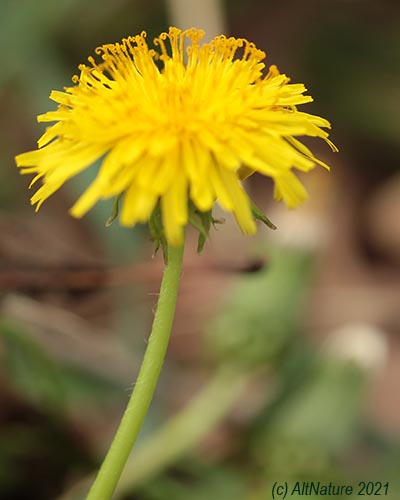
Dandelion
Taraxacum officinale
Other Names Common Dandelion, Lion’s Tooth, Priest’s Crown, Pu Gong Ying, Swine’s Snout, Dent de Lion Dandelion
Dandelion Herbal use and Possible Benefits
The whole Dandelion plant is used as an herbal remedy internally and externally. Extensive studies have been conducted on constituents of Dandelion extract in recent years for their anti-depressant and anti-inflammatory [11] activity.
Dandelion External Herbal Uses
An herbalist may apply fresh juice of Dandelion externally. The latex contained in Dandelion sap has been used to remove corns and warts. On rare occasions, the latex may cause skin irritation to those who are allergic to it.
Clinical Studies on Dandelion - See links below
Research in mice is showing potential for Dandelion's anti-depressant properties. [5] [1] A Dandelion-enriched diet of mothers alleviated lead-induced damages in liver of newborn rats. [2] According to a study, Dandelion root extract shows potential in vitro (outside the living body and in an artificial environment) for killing cancer cells. [ 3 ] Taraxasterol, a triterpene in Dandelion, has shown the ability to inhibit cigarette smoke-induced lung inflammation. [ 4 ] Dandelion leaf extract may present a promising approach for the prevention and treatment of obesity-related nonalcoholic fatty liver disease, and have other hepaprotective properties. . [6] [7] Dandelion Root Extract could be a non-toxic and effective anti-cancer alternative, instrumental for reducing the occurrence of cancer cells drug-resistance.
Dandelion Internal Uses
Dandelion root is traditionally used as a tonic and blood purifier, for constipation, inflammatory skin conditions, joint pain, eczema and liver dysfunction, including liver conditions such as hepatitis and jaundice.
Dandelion is also used for the treatment of the gall bladder, kidney and urinary disorders, gallstones, jaundice, cirrhosis, hypoglycemia, dyspepsia with constipation, edema associated with high blood pressure and heart weakness, chronic joint and skin complaints, gout, eczema and acne.
As a tonic, Dandelion is said to strengthen the kidneys. Dandelion is a powerful diuretic but does not deplete the body of potassium.
Dandelion Edible Uses
Dandelion is very nutritious, having more vitamins and minerals than most vegetables. It has a long history of use as a food in many countries. The young leaves are less bitter.
- Early Spring leaf makes a tasty green cooked, or can be added to salad raw.
- Dried and roasted Dandelion root is used as a coffee substitute.
- Dandelion flowers can be dipped in batter and made into fritters.
- Unopened Dandelion flower buds can be boiled and served with butter or pickled.
- Dandelion Wine is made from fermented flowers said by some to be a very flavorful "tonic".
Dandelion Herbal Tea
Two ounces of the dried Dandelion herb or root in 1 quart of water, boiled for 30 min. take in cup doses every 3 hours for stomach, kidney, gallbladder, and liver problems. Used as spring tonic.
*** Affiliate Ad***Dandy Blend, Instant Herbal Beverage with Dandelion Root, 2 lb. Bag Coffee Substitute
Formulated by the late Great Ethnobotanist Peter Gail Ph.D.
Order his wonderful book The Dandelion Celebration: A Guide to Unexpected Cuisine Paperback
Countless ways to use Dandelions!
Copyright AltNature 2016
Dandelion History and Folklore
In Derbyshire, the juice of the Dandelion stalk is applied to remove warts.
Other Uses for Dandelion
- When placed in a paper bag with unripe fruit, the flowers and leaves of Dandelion release ethylene gas ripening the fruit quickly.
- A liquid plant food is made from Dandelion roots and leaves.
- A dark red dye is obtained from Dandelion root.
How to Grow Dandelion
Dandelion is a very easily grown plant, it succeeds in most soils. It becomes quite large when in cultivation. The leaves can reach a foot or more in length.
Dandelion is often cultivated as an edible salad crop and as a herbal plant.
Dandelion Harvest and Use Information
Gather edible leaves and flowers of Dandelion anytime, roots in spring.
Dry for later herbal use.
Dandelion Habitat and Description
Dandelion is a perennial herb thought to be introduced from Europe and Asia. It is now naturalized throughout the Northern Hemisphere. No one is sure exactly how the dandelion has spread so widely, and there is some debate on the origin of the plant.
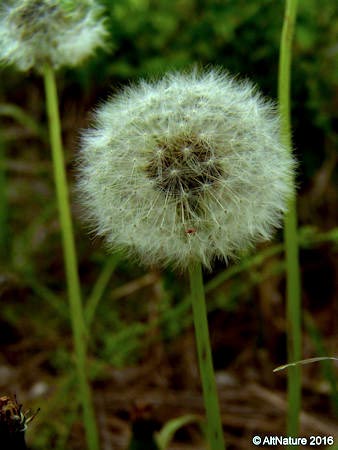
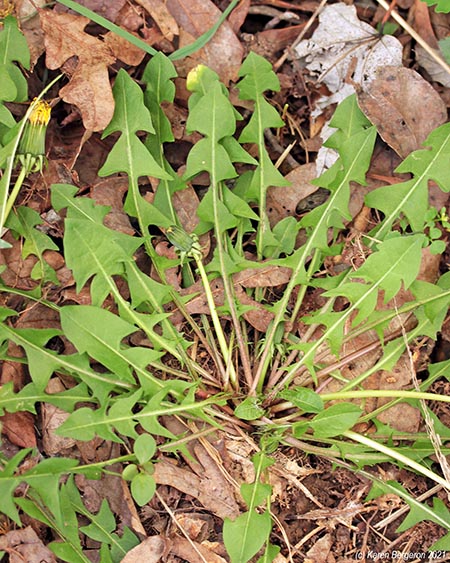
Dandelion is found growing in pastures, lawns, waste ground, sand, rocks, even cracks in concrete. From a thick, long, tap root, dark brown outside, white and milky white inside, grow long jaggedly toothed leaves, shiny, dark to light green and growing in the shape of a rosette close to the ground. A purplish flower-stalks rise straight from the center, it is leafless, smooth, hollow and bears a single bright golden yellow, furry looking flower which blooms almost anytime of the year. When mature the seed in the flowers heads are round and fuzzy, carried by the wind to be germinated where ever they land.
Dandelion Reference Links
- 1. Anti-depressive effects of Taraxacum Officinale in a Mouse Model of Depression Are Due to Inhibition of Corticosterone Levels and Modulation of Mitogen-Activated Protein Kinase Phosphatase-1 (Mkp-1) and Brain-Derived Neurotrophic Factor(Bdnf) Expression
- 2. Dandelion-enriched diet of mothers alleviates lead-induced damages in liver of newborn rats.
- 3. Dandelion root extract affects colorectal cancer proliferation and survival through the activation of multiple death signaling pathways.
- 4. Taraxasterol inhibits cigarette smoke-induced lung inflammation by inhibiting reactive oxygen species-induced TLR4 trafficking to lipid rafts.
- 5. Antidepressant effects of the water extract from Taraxacum officinale leaves and roots in mice.
- 6. Taraxacum official (dandelion) leaf extract alleviates high-fat diet-induced nonalcoholic fatty liver.
- 7. Antioxidant properties of Taraxacum officinale leaf extract are involved in the protective effect against hepatoxicity induced by acetaminophen in mice.
- 8. Anti-influenza virus effect of aqueous extracts from dandelion.
- 9. Dandelion (Taraxacum officinale) decreases male rat fertility in vivo
- 10. Evaluation of aqueous extracts of Taraxacum officinale on growth and invasion of breast and prostate cancer cells.
- 11. Anti-inflammatory activity of Taraxacum officinale
- 12. Identification and Quantification of Phytochemicals, Antioxidant Activity, and Bile Acid-Binding Capacity of Garnet Stem Dandelion (Taraxacum officinale)
Share a Dandelion Information Slide!
Print out as flash cards or use for presentations. Please give credit!
Next > Echinacea, Purple Coneflower
Disclaimer
The herbal information on this web site is intended for educational purposes only. It is not the intention of the editor to advise on health care. Please see a medical professional about any health concerns you have. These statements have not been evaluated by the FDA. The information on this web site is not intended to prevent, diagnose, treat, or cure any disease.