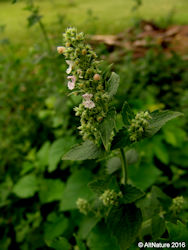
Catnip Herb
Nepeta cataria
Other Names: Catmint, Catnep, Catswort, Fieldbalm
Photo copyright K Bergeron 2002- 2017
Catnip Herbal Use
Catnip oil was found in a University Study to be 10 times as effective as Deet at repelling mosquitoes. Please let us know your results!
Catnip has a long history of use in herbalism. The leaves and flowering tops are strongly antispasmodic, antitussive, astringent, carminative, diaphoretic, slightly emmenagogue, refrigerant, sedative, slightly stimulant, stomachic and tonic. Catnip is used as an herbal remedy for treating disorders of the digestive system and, as it stimulates sweating, it is useful in reducing fevers. The fresh juice of Catnip Herb is used as an emmenagogue (to promote menstruation). Mild catnip tea is used to relieve colic in babies, restlessness and nervousness, and is very useful as a mild nervine for children. Stronger Catnip tea relieves fevers due to colds and flu as well as calming the stomach and preventing nausea and diarrhea. Applied externally as an herbal poultice, or added to bath it is good for skin irritations. Catnip oil is great for aroma therapy. A strong infusion can be used to repel fleas from carpets or the fur of animals. An extract from the leaves (called nepetalactone) has herbicidal and insect repellent properties.
Catnip plant constituents include Nepetalic acid, Alpha- & beta- Citral, Nepetalactone, Limonene, Geraniol, Dipentene, Citronella, Nerol, a terpene, Acetic acid, Butyric acid, Valeric acid and Tannin.
Catnip Edible Uses
Young Catnip leaves are edible raw. They have an aromatic mint-like flavor eaten in salads. The fresh young shoots are good in spring salads and rubbed into meat for flavor. As the name (cat-nip) suggests, cats love to nip at it, although watching them it might better be called (cat-roll) for they seem to roll, rub, and totally crush the plant into the ground. They discover that the more they crush it the more oil it releases.
Catnip Habitat and Plant Description
Catnip is a perennial herb found growing wild throughout North America and Europe where it is thought to have originated. It is easily cultivated in any garden soil. A member of the mint family, Catnip has square, erect and branched stems and grows 2 to 3 feet high. The leaves are heart-shaped, toothed, opposite and covered with fine downy hairs especially on the under sides giving the whole plant a grayish green appearance. The small tubular, two-lipped flowers grow in dense whorls atop each stem and are white to lavender with reddish to purple spots. Catnip blooms from June to September. The entire plant has a minty fragrance.
Gather the above ground parts of Catnip just after blooms open and hang in bundles to dry.
Catnip Herbal Folklore and History
It was once believed that smoking Catnip leaves would produce a mild hallucinogenic effect. Although this use has since been dispelled, it may work in some individuals. Catnip was also believed to deter the (evil-eye) from children given to fits, this because of its ability to calm an extremely agitated child and diminish nightmares.
Catnip Herb Tea Recipe
To 1 cup of boiling water add 2 tsp. dried catnip; steep for 10 min. give warm in cup doses-? cup for children 1 tbsp. diluted or in milk for babies. Mintcream: Add 3 tbsp. to 1 cup heavy cream use in cocoa or coffee.
Article by Deb Jackson & Karen Bergeron
Catnip Herb Links
Disclaimer
The herbal information on this web site is intended for educational purposes only. It is not the intention of the editor to advise on health care. Please see a medical professional about any health concerns you have. These statements have not been evaluated by the FDA. The information on this web site is not intended to prevent, diagnose, treat, or cure any disease.