German Chamomile Herb
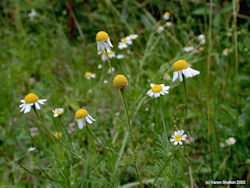
Chamomile Herb growing wild.
(c) Karen Bergeron 2008
Matricaria chamomile
Other Names: Mayweed, Scented Mayweed, Pineapple Weed
Chamomile Herbal Use
Internal Use
Chamomile is one of the most widely used flowers for herbal tea. Chamomile herb tea is so popular, it is found in most grocery stores in the tea aisle. It is used as a mild sedative, and is good for insomnia as well as many other nervous conditions. It is nervine and sedative especially suited to teething children and those who have been in a highly emotional state over a long period of time. Except for the small risk of allergy, Chamomile is also one of the safest herbs to use.
Chamomile flowers are used in alternative medicine as an anodyne, anti-inflammatory, antispasmodic, nervine, stomachic, tonic, vasodilatory. The anti-inflammatory properties make it good for rheumatism, arthritis, and other painful swellings. Additional uses in herbalism include an antispasmodic for intestinal and menstrual cramps, relieving gas pains, and a very mild but efficient laxative. Milder tea in large doses is given throughout the day for fevers, sore throats, the aches and pains due to colds, flu, and allergies.
Chamomile External Use
An infusion of Chamomile flowers is used as a hair shampoo, especially for fair hair. The flowers are sometimes added to cosmetics as an anti-allergenic agent or made into a salve for use on hemorrhoids and wounds. The dried herb is made into potpourri and herb pillows, and is burned for aromatherapy. Applied externally as a wash or compress for skin inflammations, sunburn, burns, and added to bath for relaxing tired, achy muscles and feet, and softening the skin.
Other Uses for Chamomile Herb
Chamomile tea is used as a liquid feed and plant tonic, effective against a number of plant diseases. An essential oil from the whole plant is used as a flavoring and in making perfume. The dried flowers are used as an insect repellent.
Constituents
The chief constituent of Chamaemelum have been identified as esters of angelic and tiglic, together with amyl and isobutyl alcohol’s. It also contains anthemol and a hydrocarbon anthemene. The flowers contain various volatile oils including proazulenes. Upon steam distillation these proazulenes produce chamazulene, this is remarkably anti-allergenic and is useful in the treatment of asthma and hay fever.
Chamomile Habitat and Description
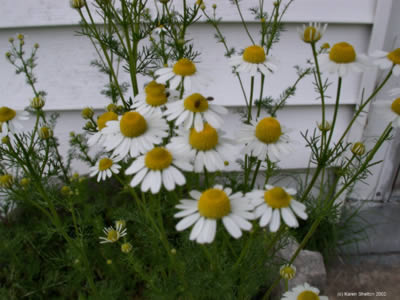
(Matricaria chamomilla) Wild Chamomile is an annual herb originally from Europe which has escaped to the wild and is now naturalized on almost every continent. It can now be found growing along fence rows, roadsides, and in sunny open fields from Southern Canada to Northern U.S. west to Minnesota. The branched stem is somewhat erect, round, hollow, and grows to about 20 inches tall. The leaves are bipinnate, finely divided, light green and feathery. The flowers are daisy-like about 1 inch across and bloom from May to October. The entire plant has a pineapple scent (apple to some) and planted in the garden is said to help sickly plants to grow. Gather the above ground parts as soon as flowers bloom, dry for later herb use.
Chamomile History and Folklore
It is said that the Egyptians dedicated Chamomile to their sun god and valued it over all other herbs for its healing qualities. Due to its sedative and relaxing properties Chamomile was an ingredient in some love potions in the middle ages.
Chamomile Herb Recipe Ideas
The flowers are edible and quite tasty in salads or made into a refreshing cold or warm beverage.
Relaxing tea: To 1 cup boiling water add 2 tsp. dried flowers. Steep covered for 10 min.
For Bath: Use up to 1 cup fresh or dried herb tied in linen bag. Place in tub with hot water let soak for 10 min. then add cold water to the temp. you like. Do not add soap to bath, as it will coat your skin and not allow the Chamomile to penetrate.
Also for colds or when you feel really bad, try the tea while you're soaking in the bath.
Article by Deb Jackson & Karen Bergeron Copyright 1998-2014
Informative Chamomile Links
Botanical.com Chamomile Information from A Modern Herbal Vol. 1
Disclaimer
The herbal information on this web site is intended for educational purposes only. It is not the intention of the editor to advise on health care. Please see a medical professional about any health concerns you have. These statements have not been evaluated by the FDA. The information on this web site is not intended to prevent, diagnose, treat, or cure any disease.