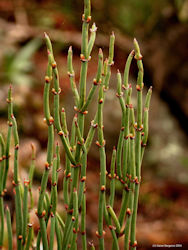
Ephedra
Ephedra nevadensis
Other Names: Brigham Tea, Mormon tea, American Ephedra, Nevada Joint-fir, American Ma Huang, Mexican tea, Desert Ephedra, Desert tea
Ephedra Herbal Use
Ephedra herb was used extensively for food and medicine by Native Americans of the Southwest, especially in dry desert areas. The fruit or buds are eaten raw and have a very mild sweet taste. The seed is roasted and used as coffee or ground into a meal for bread. The stems of most Ephedra species contain the alkaloid ephedrine which is very valuable in the treatment of asthma and many other respiratory complaints.
The stems are said to be anti-viral, antidote, antispasmodic, diaphoretic, blood purifier, diuretic, pectoral, febrifuge, vasodilator, stimulant, and tonic. The young stems are best if eaten raw, though older stems can be used to make a tea. The plant has antiviral effects, particularly against influenza. Unlike using the isolated or synthesized ephedrine, using the whole plant in alternative medicine is much more effective and rarely gives rise to serious side-effects. This is true with most herbs, but especially with Ephedra, since other plant constituents can help buffer or improve the actions of the main constituents. Other plant constituents in Ephedra are Calcium, Phosphorus, Protein, Flavone, Saponin, Tannins, and Volatile oil. Ephedrine acts quickly to reduce swellings of the mucous membranes, dilates the bronchial vessels and has antispasmodic properties. Because of this scientifically proven action on the respiratory system it is known to have saved many lives, while Ephedra does not cure asthma it is very effective in treating the symptoms and making life somewhat easier for the sufferer. Used for centuries in Chinese medicine Ma Huang or Chinese Ephedra is well known and exported all over the world for use in pharmaceuticals to treat asthma, hay fever, allergic complaints, stimulating the heart and central nervous system, and kidney problems. While the chemical constituents in the American Ephedra plant is said to be less concentrated, it is still used for the same herbal purposes and said to have fewer side effects.
Ephedra Habitat
Southwestern N. America, found growing on dry slopes and hills, sandy plains, canyons, sandy and rocky places, deserts. Ephedra may be found further east in dry areas where it has escaped cultivation. Cultivation requires some effort, prefers light (sandy) dry, acid, soil in sunny position, cannot grow in the shade and not self-fertile, both male and female plants must be grown if seed is desired. An evergreen shrub growing 2 to 3 feet high with no leaves. Stems are green, smooth, woody, branching, and very jointed. Small yellow-green buds appear in the joints when in bloom. Gather stems anytime and dry for later use.
Caution is advised as an overdose can be fatal, causing high blood pressure, racing of the heart, confusion, nervous stupor, twitching, convolutions and death. Ephedrine is seen as a performance-boosting herb and is a forbidden substance in many sporting events such as athletics. This herb should not be used by people who are taking monoamine oxidase inhibitors, or suffering from high blood pressure, hyperthyroidism or glaucoma.
Folklore Ephedra was found buried in a Middle Eastern neolithic grave, indicating that it was used as a medicine over 60,000 years ago (TRUE). It is believed that the roots of the plant have the opposite effect of the stems, this is unproven. An infusion of the dried stems has been used in the treatment of venereal diseases. The pulverized or boiled stems were also used for delayed or difficult menstruation or applied externally as a poultice on syphilitic and other sores by some native North American Indians. It was also used as a ceremonial drug to improve the alertness of the hunter and the wood of the plant is considered the best charcoal for tattooing.
Article by Deb Jackson & Karen Bergeron
Disclaimer
The herbal information on this web site is intended for educational purposes only. It is not the intention of the editor to advise on health care. Please see a medical professional about any health concerns you have. These statements have not been evaluated by the FDA. The information on this web site is not intended to prevent, diagnose, treat, or cure any disease.