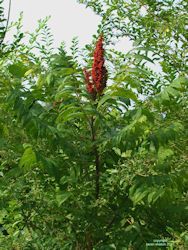
Sumac
Rhus glabra
Other Names: Dwarf Sumac, Mountain Sumac, Scarlet Sumac, Smooth Sumac, Upland Sumac, White Shoemake, Vinegar-tree, Red sumac
Sumac Herbal Use, Edible
Wild Sumac was used extensively by Native Americans for food and medicine. Young shoots and roots are peeled and eaten raw. The fruit is also eaten raw, cooked or made into a lemonade-like drink. The active constituents in Sumac are being studied for use in many diseases some possible applications are in the treatment of TB, diabetes, and some cancers.
Staghorn Sumach Photo by Karen Bergeron-Shelton Copyright 2002
Wild Sumac contains Calcium malate, Dihydrofisetin, Fisetin, Iodine, Gallic-acid-methylester, tannic and gallic acids, Selenium, Tartaric-acid, and many beneficial minerals.
An infusion of Sumac bark or roots is alterative, antiseptic, astringent, diuretic, galactogogue, haemostatic, rubefacient and tonic. It is used in alternative medicine for the treatment of colds, diarrhea, fevers, general debility, to increase the flow of breast milk, sore mouths and throats, rectal bleeding, inflammation of the bladder and painful urination, retention of urine and dysentery and is applied externally to treat excessive vaginal discharge, burns and skin eruptions. Powdered bark of Sumac is made into a good antiseptic salve. An infusion of the leaves is used for asthma, diarrhea and stomatosis. A poultice of the leaves used to treat skin rashes. Sumac leaves are also chewed for sore gums and rubbed on sore lips.
An infusion of Sumac berries is diuretic, emetic, emmenagogue, purgative and refrigerant. It is used in the treatment of late-onset diabetes, constipated bowel complaints, febrile diseases, dysmenorrhoea (painful or difficult menstruation). The berries have been chewed as a remedy for bed-wetting. An infusion of Sumac blossoms used as an eye wash for sore eyes. The milky latex from the plant is used as a salve on sores.
When broken or cut, Sumac plant produces a milky substance which forms a solid gum-like body or gall, containing large quantities of tannic and gallic acid. These galls are used in tanning leather. A herbal wine can also be prepared from them. An oil extracted from the seeds is used in making candles. Brown, red, and black dye are obtained from the berries, said to be excellent for wool.
Sumac Native Habitat and Plant Description
Sumac is a deciduous shrub native to North America found in all 48 mainland states of USA and in southern Canada. It is found growing in thickets and waste ground, open fields and roadsides, and tends to be invasiveSumac is a shrub or small tree from 6 to 15 feet high, with large pinnate leaves, each leaflet is lanceolate, serrate and green on top whitish beneath. In the fall the leaves turn a bright red. Flowers bloom in June and July they are in dense panicles of greenish-red small five petaled flowers. The edible fruit is a large erect cluster of small bright red berries.
How to Harvest Sumac
Gather edible young shoots in spring, roots and berries in fall. Dry for later herb use.
How to Grow Sumac
Cultivation of Sumac is easy, root cuttings are best long taken in December, it prefers well-drained acid soil and full sun.
Sumac History and Folklore
Believed by some Native American tribes to foretell the weather and the changing of the seasons, for this reason it was held as a sacred plant.
Sumac Recipe
Cooling Drink: To a handful of berries add 2 cups cold water, let site overnight in cool place, do not heat or liquid will become bitter and astringent. Strain and sweeten to taste.
Sumac berries, bark, root and leaves have many uses in traditional medicine. My favorite use of sumac is to take the berries in late summer and soak them in a jug of cold water, strain through muslin or cheesecloth to eliminate the rough hairs, sweeten and it makes a delicious citrus tasting drink. Berry clusters can also be used in dried arrangements and crafts, they hold their shape and color for years if stored properly. These small trees have stunning red pinnate leaves in autumn. They hang on to the berries all winter, until pushed off by new spring buds. All the sumac bushes with red berries are non poisonous. Poison Sumac has drooping white berries and is a skin irritant of the worst kind.
Article by Deb Jackson & Karen Bergeron
Disclaimer
The herbal information on this web site is intended for educational purposes only. It is not the intention of the editor to advise on health care. Please see a medical professional about any health concerns you have. These statements have not been evaluated by the FDA. The information on this web site is not intended to prevent, diagnose, treat, or cure any disease.