Yarrow
Achillea millefolium
Other Names: Milfoil, Old Man’s Pepper, Soldier’s Woundwort, Knight’s Milfoil, Thousand Weed, Nose Bleed, Carpenter’s Weed, Bloodwort, Staunchweed
Yarrow Herbal Use
Yarrow is considered a very valuable medicinal herb. Research suggests use in alternative medicine as an antiseptic, antispasmodic, astringent, carminative, diaphoretic, digestive, emmenagogue, stimulant, and tonics, vasodilator and vulnerary.
Yarrow is best known for its benefit as an emergency remedy to stop or lessen bleeding from open wounds. It has been used as an infusion against colds, cramps, fevers, kidney disorders, toothaches, skin irritations, and hemorrhages, and to regulate menses, stimulate the flow of bile, and purify the blood. Yarrow herb tea is a good remedy for severe colds and flu, for stomach ulcers, amenorrhea, abdominal cramps, abscesses, trauma and bleeding, and to reduce inflammation.
The main constituents of Yarrow are volatile oils including linalool, camphor, sabinene, and chamazulene, sesquiterpene lctones, flavanoids, alkaloids including achilleine, polyacetylenes, triterpenes, salicylic acid, coumarins, and tannins which prove these uses in alternative medicine to be effective. Extracts of yarrow exhibit antibiotic activity and may also act as anti-neoplastic drugs.
Yarrow herb is used externally for treating wounds and stopping the flow of blood. Yarrow oil has been traditionally used in hair shampoos. Some caution is advised , large or frequent doses taken over a long period may cause the skin to be more sensitive to sunlight.
Yarrow Native Habitat and Description
Yarrow is a perennial herb, native to Europe and Asia and naturalized in North America and most other countries throughout the world. Yarrow is very common along roadsides and in old fields, pastures, and meadows in the eastern and central United States and Canada.
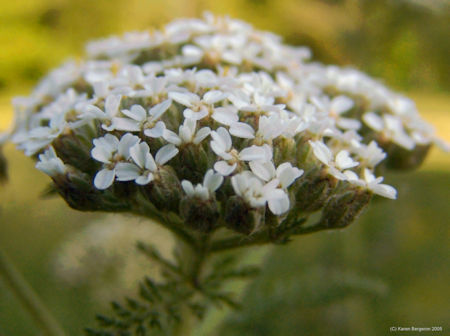
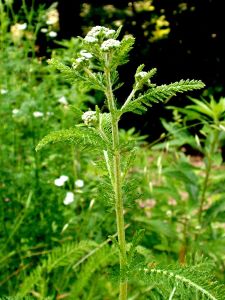
Yarrow grows from 10 to 20 inches high, a single stem, fibrous and rough, the leaves alternate, 3 to 4 inches long and 1 inch broad, larger and rosette at the base, clasping the stem, bipinnatifid, the segments very finely cut, fern-like, dark-green, giving the leaves a feathery appearance. The flowers are several bunches of flat-topped panicles consisting of numerous small, white flower heads. Each tiny flower resembling a daisy. The whole plant is more or less hairy, with white, silky appressed hairs. Flowers bloom from May to August.
How to grow Yarrow Herb
Yarrow is easily cultivated, will survive in poor soil. Prefers a well-drained soil in a sunny position. A very good companion plant, Yarrow improves the health of plants growing nearby and enhances their essential oil content thus making them more resistant to insect predations also improves the soil fertility.
Gather Yarrow herb stems, leaves and flower heads in bloom, dry for later herb use. Dry herb for edible use as a spice or flavoring, strong sage flavor.
Yarrow Folklore and History
It was one of the herbs dedicated to the Evil One, in earlier days, being sometimes known as Devil’s Nettle, Devil’s Plaything, Bad Man’s Plaything, and was used for divination in spells.
Yarrow Herb Recipe
An aromatic tea: To 1 tsp. dried herb add 1 cup boiling water, steep for 10 min. sweeten to taste. Take at bedtime.
Article by Deb Jackson, (c) 2000 Edits and Photograpy by Karen Bergeron. All rights reserved.
Disclaimer
The herbal information on this web site is intended for educational purposes only. It is not the intention of the editor to advise on health care. Please see a medical professional about any health concerns you have. These statements have not been evaluated by the FDA. The information on this web site is not intended to prevent, diagnose, treat, or cure any disease.