Blue Vervain Herb Use
Verbena hastata, Verbena simplex, Verbena officinalis
Other Names: American blue vervain, Blue Vervain, Herb of Grace, Herba veneris, Simpler’s Joy, Swamp Verbena, Vervain, Wild hyssop, Wild Vervain,
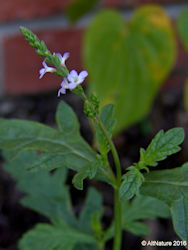
Blue Vervain is a North American native perennial herb, found growing along roadsides, in open sunny fields, and waste places throughout the United States and southern Canada.
Vervain Edible Uses
Blue Vervain is edible and used in herbalism. Vervain had many uses in Native American culture as food and medicine. The seed are edible when roasted and are ground into a powder and used as a pile (an Indian flour).
The leaves and roots of Blue Vervain herb are a valuable alternative medicine used as an antidiarrheal, analgesic, anthelmintic, antiperiodic, astringent, diaphoretic, emetic, emmenagogue, expectorant, sedative, tonic, vermifuge, vulnerary. It is useful in intermittent fevers, ulcers, pleurisy, scrofula, gravel, easing pain in the bowels and expelling worms. A very strong infusion is emetic. As a poultice, it is said to be good in headache and rheumatism.
An infusion of Vervain is a good galactagogue (increases breast milk) and used for female obstructions, afterpains and taken as a female tonic. The infusion is also used to help pass kidney stones and for infections of the bladder. Vervain tea is used as a sudorific and taken for colds and coughs. Also useful for insomnia and other nervous conditions. It is quite bitter.
Vervain Herb Tea Recipe
To 1 tbsp. dry herb add 1 pint boiling water, steep 10 min. take 1 tbsp. up to six times a day and take 1/2 teacup (2 oz.) warm before bedtime.
Medical research has detected the presents of adenosine, aucubin, beta-carotene, caffeic-acid, citral, hastatoside, lupeol, ursolic-acid, verbenalin, verbenin, and other chemical constituents in this plant which prove these uses to be valid. But much more research needs to be done on this herb and its constituents. It may prove to be useful in treating many cancers and other diseases.
White Vervain and other vervains have similar herbal uses.
Vervain Description and Habitat
Growing erect from 2-3 feet tall, with square stems and opposite branches. The leaves are opposite, serrate, and lanceolate with short leaf stalks. The flowers are small and pale-lilac, 5 petaled and arranged on long numerous spikes in a panicle. Blue Vervain flowers bloom from June to September.
How to Grow and Use Vervain
Blue Vervain succeeds in any moderately fertile well-drained but moisture retentive soil in a sunny position, sow seed in early spring or root division in spring. Basal cuttings in early summer. Harvest the shoots with plenty of underground stem for transplanting. Gather the entire plant just before flowers open, dry for later herb use. Gather after flowers fade and dry to loosen seed for roasting.
Vervain Folklore and History
In Iroquois witchcraft medicine, cold infusion of smashed leaves used to make an obnoxious person leave. Vervain was considered a cure-all and sacred plant, helping to save those of the medieval plagues. The name Vervain is derived from the Celtic ferfaen, from fer (to drive away) and faen (a stone), as the plant was much used for affections of the bladder. Another derivation is given by some authors from Herba veneris, because of the aphrodisiac qualities attributed to it by the Ancients. Priests used it for sacrifices, and hence the name Herba Sacra. The name Verbena was the classical Roman name for ’altar-plants’ in general, it was used in various rites and incantations, and employed by magicians and sorcerers.
Article by Deb Jackson & Karen Bergeron
Blue Vervain Links
Vervain Use, Benefits and Side Effects - Drugs.com Herbal Database
Disclaimer
The herbal information on this web site is intended for educational purposes only. It is not the intention of the editor to advise on health care. Please see a medical professional about any health concerns you have. These statements have not been evaluated by the FDA. The information on this web site is not intended to prevent, diagnose, treat, or cure any disease.