Perilla
Perilla frutescens
Other Names: Shiso, Beefsteak plant, Wild red basil, Chinese basil, Purple mint, Rattlesnake weed, Summer coleus, Rattlebox
Although Perilla is safe in moderation and is widely used in Asian cooking, it is invasive and the most deadly plant to cattle in Tennessee, as it flowers when many plants are drying up. Cattle will avoid it if other forage is available, but a diet of mostly Perilla will kill them.
Perilla is becoming invasive and favors roadsides, the edges of woods and pastures.
Perilla Herbal Uses
Perilla is a pungent, aromatic, warming herb. An infusion of the plant is used by herbalists as a remedy for asthma, colds, cough and lung afflictions, influenza prevention, nausea, vomiting, abdominal pain, constipation, food poisoning and allergic reactions (especially from seafood), and to restore health and balance.
Perilla Plant Constituents
Research has isolated such constituents as apigenin, Ascorbic-acid, beta-carotene, caffeic-acid, citral, dillapiol, elemicin, limonene, luteolin, myristicin, perillaldehyde, protocatechuic-acid, quercetin, rosmarinic-acid, and more, too numerous to mention. Perilla smells funny, which is no wonder since you will usually find it in cow pastures. Rub leaves on your skin and clothes on hikes to repel ticks. Also a good companion plant for tomatoes. Harvest before the seeds are released, as it is very invasive if allowed to go to seed.
Perilla Edible Uses
Perilla is an edible plant. The leaves have an enjoyable sweet taste and are used as a spice, cooked as potherbs or fried, and combined with fish, rice, vegetables, and soups. It is also chopped and mixed with gingerroot, then added to stir-fries, tempuras, and salads in many Asian countries.
Perilla also supplies a nutritious oil from the seed, which is very high in Omega 3s. The seeds can also be harvested and used as a table spice, much as we are used to using salt and pepper. The plant adds color and flavor to many pickled dishes.
In the United States, the essential oil of the plant is used as a food flavoring in candies and sauces, and as a flavoring in dental products. At one time, it was one of the main ingredients in sarsaparilla. The entire Perilla plant is very nutritious and packed with vitamins and minerals. One of the aldehyde isomers found in Perilla is 2,000 times as sweet as sugar.
How to eat Perilla – 10 ways to enjoy them in Korean cooking!
Other Uses for Perilla Plant
Perilla seed oil has been used in paints, varnishes, linoleum, printing ink, lacquers, and for protective waterproof coatings on cloth. Volatile oils of the plant are also used in aromatherapy and for perfume. The seed heads can be collected and dried for use in arrangements, potpourris, and wreaths. The crushed plant also makes an effective insecticide.
Perilla Habitat and Plant Description
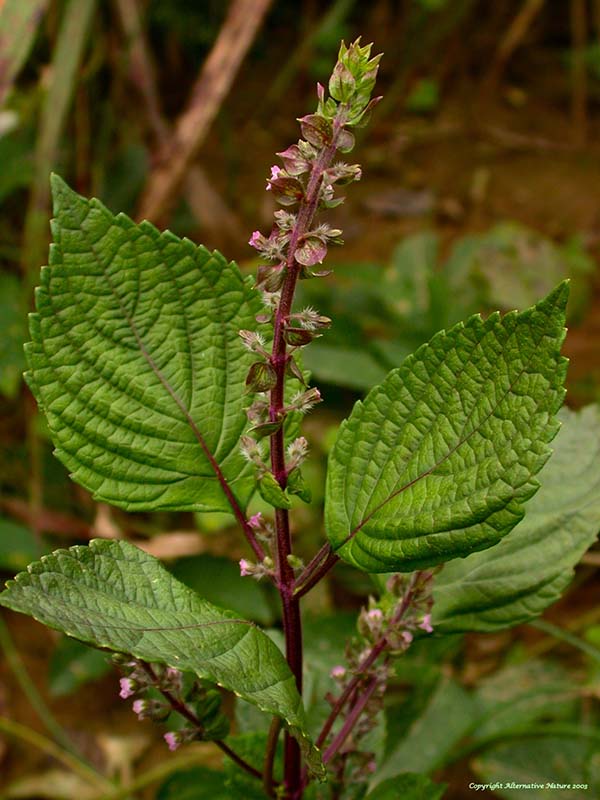
Perilla is an erect annual with a square stem and wrinkled egg shaped leaves with serrated margins and pointed tips. In Tennessee, it is a common, invasive plant common to cow pastures and on the edge of the woods.
Perilla History and Folklore
In Asia, centuries ago, ceremonies were conducted before harvesting the plant, it was considered to be alive and was held as sacred, sent by God as food and medicine to treat all ailments of man. Disrespect for the plant meant death, anyone caught stepping on the plant would himself be trampled to death!
Perilla Herb Recipe
Perilla Herbal tea: To 1 tbsp. dry herb add 1 pint of boiling water, allow to steep 10 to 15 min.
Perilla can also be boiled and the steam inhaled to clear the sinuses.
Article by Deb Jackson & Karen Bergeron (c) 2001 Updated by Karen Bergeron 09/22/2022
Disclaimer
The herbal information on this web site is intended for educational purposes only. It is not the intention of the editor to advise on health care. Please see a medical professional about any health concerns you have. These statements have not been evaluated by the FDA. The information on this web site is not intended to prevent, diagnose, treat, or cure any disease.